|
|
||||||||||||||||||||||||||||||||||||||||||||||||||||||||
|
|
||||||||||||||||||||||||||||||||||||||||||||||||||||||||
|
Conveying Modern thoughts in a Traditional way |
||||||||||||||||||||||||||||||||||||||||||||||||||||||||
|
By CHARLES SAVAGE The Straits Times, Jan.14, 1988
"It is a very personal, never-ending search, I'm always somewhere but I never arrive." Because of this, James Tan says with an embarrassed grin, "it is difficult to tell people where I am. I'm not really sure which direction I'm going in!"
Tan's search for ways to combine traditional Chinese brush painting techniques with contemporary themes is played out at an exhibition of more than 90 different works at the National Museum Art Gallery. He has stripped the walls of his home of all paintings, including his favorites, which are not for sale for the show.
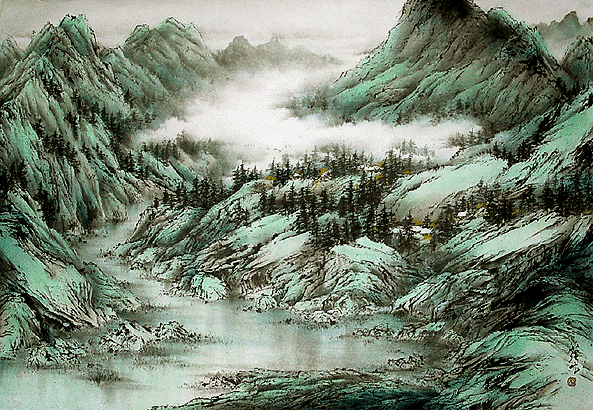
Born in Johore, Tan's combines the traditional brush painting techniques of the Lingnan (Cantonese) school of painting with modern subjects and contemporary themes.
An example of this eclectic style is a striking Monterey beachscape he saw on his way from Carmel to San Francisco, I the work .won a consolation ' prize in the 1985 OUB Art Corn petition. The actual scene was \ brown and grey but Tan changed I the colours because "it wouldn't come out well in Chinese paints, j you have to combine traditional < Chinese colours into it to get just f that feel".
The show is a varied codec- varied of different themes, subjects, styles and techniques. A painting of a river in New Orleans is typically Western in composition but ?Eastern in brush stroke and colour. The end result is serenity.
I there are some more recent techniques and styles Tan am experimenting with, but he's keeping them for a later exhibition.
"I don't give up traditional painting because it is from that that I derive the basic techniques that I need," Tan says. About two-thirds of his works are contemporary or abstract. "Its images I want mostly, not the subject matter, but the feeling," he says.
He does not make any claims for unique techniques or style "If I like the ideas. I make use of them. I go more for the contemporary rather than the traditional because it gives me a chance to explore; it gives me a chance to expose myself to a new world. But even in the traditional work, there is a blend of East and West. People believe that East and West do not mix together well, but in my works the/are in harmony," Tan concludes.
"My fundamental philosophy is that beauty and peace always go together." The best symbol for this is a bird. "I like birds. They are free to go where they want, I like to sit down and watch them fly." Birds also symbolize his de- sire to be free. "I do not worry about what people say. I always paint the way I want," Tan points out.
He displays a child-like fascination for things happening around him and a youthful exuberance. This probably explains why people always think that he's still in his 20s although Tan is more than 35 years old.
"Every one I meet always thinks that an artist has to be an old man. They always think that an artist is disorganized and dirty, so they are usually quite surprised when they first meet me," Tan says.
| BIOGRAPHY | ARTICLES | GALLERY | EVENTS | RECENT WORKS | ART COURSE | |
||||||||||||||||||||||||||||||||||||||||||||||||||||||||
|
||||||||||||||||||||||||||||||||||||||||||||||||||||||||